muhammad imran · multan, pakistan

I help train frontier AI, & build clean things when the sun goes down.

Primarily, I contribute STEM annotations and benchmark tasks to the projects that train state-of-the-art language models. Alongside that — a deep love for pixel-perfect interface design, and one-on-one tutoring in mathematics, coding, and Arabic.

Open to research projects, frontend work, and tutoring enquiries
at work
Mindrift CI-STEM · SciCode · previously Photomath
background
BS Mathematics, University of Education, Lahore
builds with
HTML · CSS · JavaScript · React · Python
teaches
Mathematics · Coding · Arabic & Quran
01 — research · primary

Training frontier AI, one careful annotation at a time.

ongoing · 2023 — present

My main work is contributing the human signal that makes state-of-the-art language models better — mostly in STEM, agents, and graph-structured reasoning. It's meticulous, rigorous, and quietly important.

prompt design · active

Mindrift CI-STEM

Computationally Intensive STEM prompts for frontier LLM evaluation

Crafting prompts with structurally hard number-theoretic backbones — Collatz dynamics, Mertens function, aliquot sequences — designed to force genuine computation rather than pattern-matched answers. Framework currently at v6.

Number theoryPythonSymPyLLM eval
benchmark authoring · active

SciCode Benchmark

STEM scientific-computation task review & authoring

Reviewing and authoring scientific computation tasks in structured JSON — e.g. a corrected ETDRK4 solver for the nonlinear Schrödinger equation. Each task audited against a seven-point structural-defect checklist.

Numerical methodsJSON schemasPython
annotation · past

Photomath

Math problem-solving annotation · 2023 — 2024

Authored and reviewed step-by-step solutions for the Photomath training corpus — across algebra, geometry, calculus, and word problems. The work taught me how much a correct final answer can hide a broken middle.

Step annotationMath reasoningQA

Where I focus.

at the seam of maths & code
→ 01
STEM annotation for LLM training
Worked solutions, rubric-grounded scoring, chain-of-thought quality review across mathematics, physics, and computer science.
→ 02
Agent trajectories & tool-use
Designing and evaluating multi-step agent problems — where the answer depends on the right tool calls in the right order.
→ 03
Graph-structured reasoning
Problems whose structure is a graph or a tree — dependency chains, state transitions, causal diagrams — and how models do (or don't) traverse them.
→ 04
Benchmark design for frontier models
Structural properties that make a STEM task actually hard — as opposed to looking hard — and resistant to shortcut exploitation.
→ 05
Numerical precision & reproducibility
Deterministic floating-point summation, fixed-point arithmetic, MCMC samplers with explicit RNG seeds — correctness as a property of the code, not a vibe.
→ 06
Chart & figure analysis
Extracting precise values from scientific figures — interpolation, error bars, axis calibration — with full reasoning traces.

The bench.

tools I use for research work
Computation
  • Python
  • NumPy
  • SymPy
  • SciPy
  • Matplotlib
Writing & typesetting
  • LaTeX
  • Overleaf
  • KaTeX
  • Pandoc
Authoring tooling
  • Jupyter
  • Git
  • JSON schemas
  • React (eval UIs)
Frontier-model work
  • Claude
  • ChatGPT
  • Gemini
  • Custom prompt harnesses
02 — frontend · secondary

Frontend work, now presented with clearer proof.

2024 — now

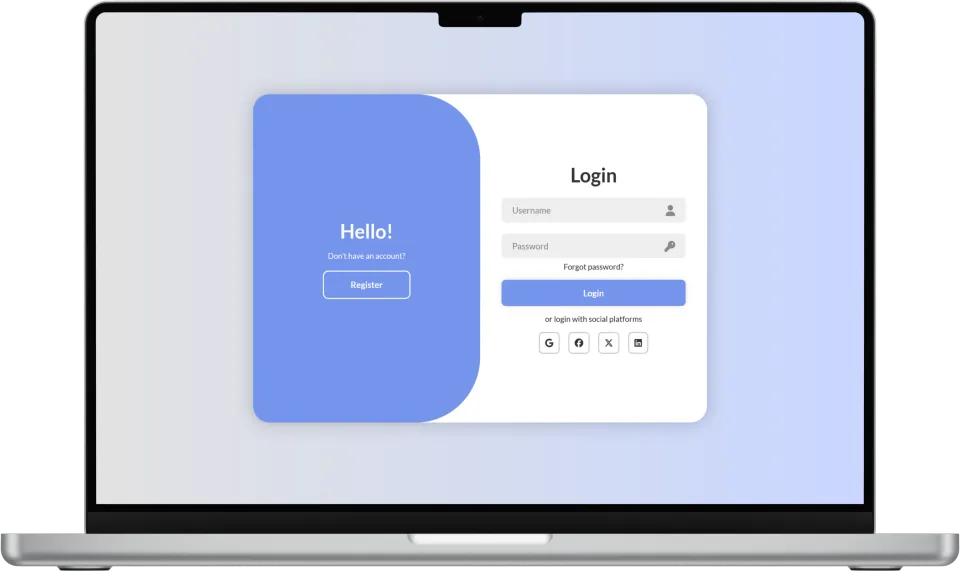
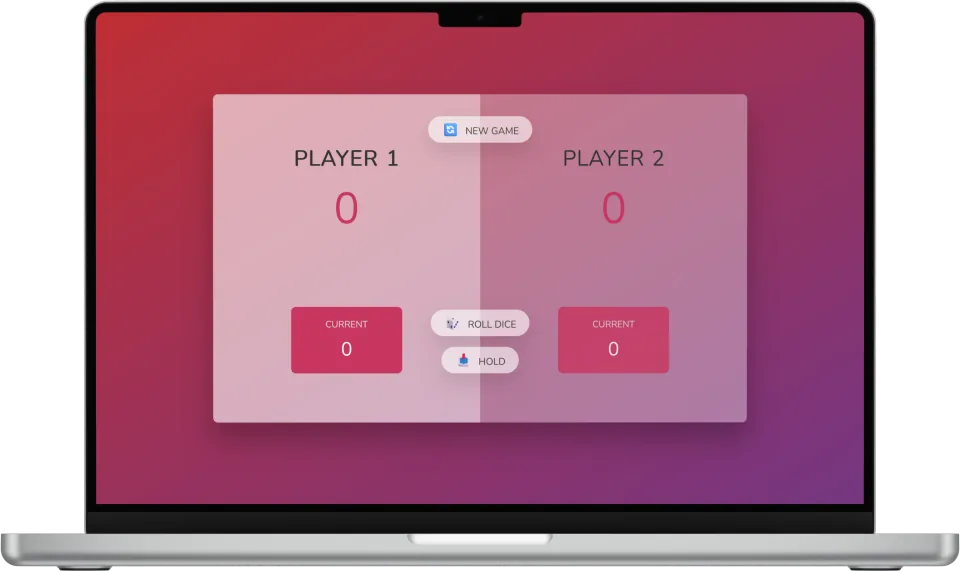
A secondary discipline, but not a casual one. I build restrained, responsive interfaces with attention to layout, typography, accessibility, motion, and maintainable code.

Semantic HTMLResponsive CSSAccessible formsVanilla JS logicReact in progress

Frontend stack.

what I reach for
Design & prototype
  • Figma
  • Framer
  • Canva
  • Miro
Development
  • HTML
  • CSS
  • JavaScript
  • React
  • Tailwind CSS
  • WordPress
Authoring
  • LaTeX
  • Overleaf
  • Notion
  • Markdown
Ecosystem
  • Git & GitHub
  • Netlify
  • Chrome DevTools
  • ChatGPT
03 — tutoring · tertiary

Three disciplines. One approach.

online · worldwide

I tutor in three things I care about deeply: mathematics for Pakistani secondary and intermediate students; programming for self-taught learners and university students; and Quranic Arabic for those wanting to understand what they recite. Live one-on-one sessions, online, worldwide.

Mathematics — classes I teach.

Pakistani secondary & intermediate
9th
Matriculation · Year I
PTBFBISE
Real Numbers, Algebraic Manipulation, Linear Graphs, Geometry & Proofs.
10th
Matriculation · Year II
PTBFBISE
Quadratics, Matrices, Trigonometric Identities, Chords & Arcs, Basic Statistics.
11th
FSc · Part I
PTBFBISE
Sets, Sequences & Series, Permutations & Combinations, Induction, Trigonometry.
12th
FSc · Part II
PTBFBISE
Functions & Limits, Differentiation, Integration, Vectors, Analytic Geometry, Linear Programming.

Online solutions.

better than the old math keys

A growing library of free, interactive, chapter-by-chapter solution notebooks. Every example worked through step-by-step, with inline explanations, LaTeX-rendered equations, and short video walkthroughs — not the terse, hand-scribbled "key" style students have been stuck with for decades.

Live · free to use

Real Numbers — Class 9, Unit 1

PTB Mathematics · every example and exercise, fully worked

The first complete notebook in the series. Every worked example, every exercise problem, every review question — with inline footnote explanations, LaTeX equations, and step-by-step reasoning you can follow at your own pace.

Open the chapter
Coming soon

Logarithms — Class 9, Unit 2

PTB Mathematics · in progress

Next up in the Class 9 series. Common and natural log laws, change of base, solving exponential equations, and applied problems.

Planned

Integration — FSc Part II, Unit 3

PTB Mathematics · queued

Definite and indefinite integrals, techniques of integration, applications — same structure as the Class 9 notebooks but for 12th-grade.

about

A mathematician who fell in love with tech.

multan, pakistan · GMT+5
Portrait of Muhammad Imran
Muhammad Imran
Research contributor · Developer · Tutor

I was a mathematics major who kept being pulled toward tech. I eventually found my niche — but the maths never left.

My primary work is STEM annotation and benchmark authoring for the projects that train state-of-the-art language models. I've contributed to Mindrift's CI-STEM programme, SciCode's benchmark library, and previously to Photomath's step-solution corpus. The work sits at the seam of pure mathematics and engineering rigour, which is exactly where I like to be.

Frontend is my passion. I've always loved aesthetic, accurate, pixel-perfect work — interfaces that respect typography, spacing, and motion. It's the craft I reach for when I'm not annotating. I build with HTML, CSS, JavaScript, and React, and I care deeply about accessibility and performance.

Tutoring is my third thread. Because I loved maths so much as a student, I wanted to help students in Pakistan and worldwide have a better experience than the terse, hand-scribbled "keys" we grew up with. I teach Classes 9–12 mathematics, programming, and Quranic Arabic — and I'm building a library of interactive, beautifully-typeset solution notebooks to replace the old textbook keys.

One instinct runs through everything: make the complicated thing feel obvious.

contact

Research collab, frontend brief, or a tutoring enquiry?

usually replies within a day

All three welcome. Tell me what's on your mind — the more specific the better. If it's a tutoring enquiry, mention the subject and level; if it's frontend, link a reference or a brief; if it's research, tell me the project or platform.